

A podcast social media strategy that works matters more than ever. Why? Because 42% of listeners find new podcasts through channels like Instagram, TikTok, and Facebook. Yet, most podcasters struggle. They only post episode links, promote once and move on, or share low-quality clips.
We’ve compiled 11 practical podcast social media strategy tips that deal with these common pitfalls. These strategies will show you how to promote a podcast on social media and help you build an involved audience that grows your show in 2026.
Repurpose Your Podcast Episodes Into Short-Form Content
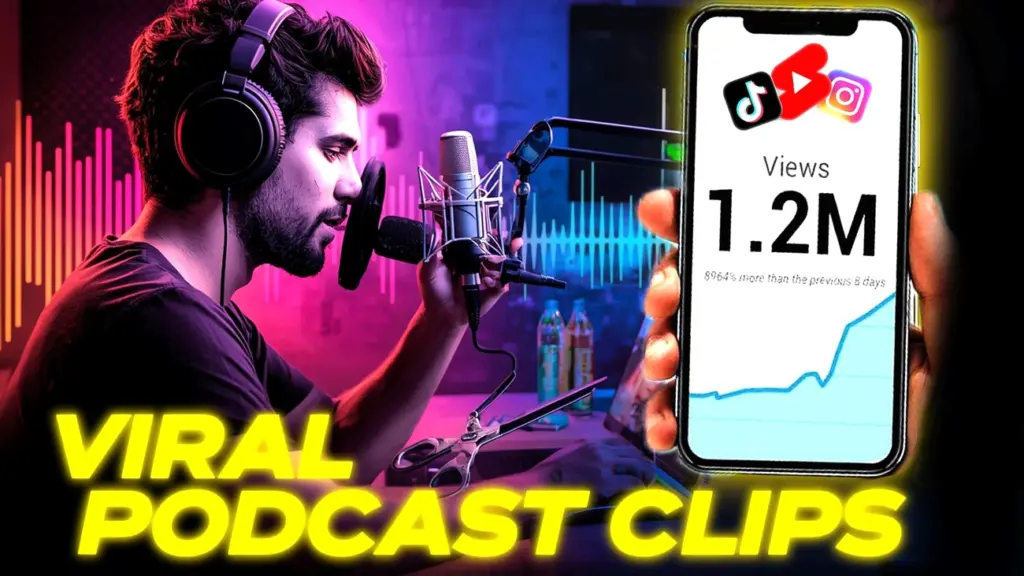
Image Source: Fiverr
What Short-Form Content Means for Podcasters
Short-form content refers to video clips between 15 and 60 seconds. Platforms like TikTok, Instagram Reels, and YouTube Shorts use this format. A single hour-long episode can yield 10 to 20 standalone clips. Each clip serves as a discovery point for new listeners who scroll with sound off.
Why Repurposing Works on Social Media
Short-form video delivers the highest ROI among all social media marketing strategies at 30%. Reels reach non-followers by default. A podcast with 200 followers can reach 20,000 people with a single compelling clip. Videos under one minute get the most engagement, and 85% of users watch with sound off. This creates a discovery loop that traditional episode links cannot match.
Best Formats for Each Platform
Video clips with human faces outperform audiograms substantially on visual platforms. TikTok and Instagram Reels need vertical 9:16 format with clips between 30 and 60 seconds. LinkedIn favors 45 to 120-second insight-driven clips in square or landscape orientation. YouTube Shorts requires vertical format under 60 seconds. Audiograms work on Facebook feeds but don’t perform as well as actual video footage on most platforms.
How to Extract Compelling Clips
Listen to your full episode and note timestamps that mark 10+ shareable moments. Prioritize surprising facts, controversial statements, practical advice, or personal anecdotes. Each clip must stand alone without much context while creating curiosity to hear more. Extract these segments and pair them with captions since most viewers scroll without sound.
Lead With Strong Hooks Instead of Your Podcast Name
Image Source: Radarr
What Makes a Hook Effective
A social media hook captures attention within the first two seconds. Effective hooks promise value, create curiosity gaps, or challenge existing beliefs. The first few seconds determine whether someone stops scrolling or swipes past your content. Hooks must deliver standalone comprehensibility without requiring context from your full episode. A complete micro-narrative arc has an intriguing opening and a payoff.
Why Generic Promotion Fails on Social Media
Most people scrolling social feeds aren’t ready to leave the platform just to listen to your full episode. Posts starting with your podcast name or generic “New episode out now” announcements fail because they don’t provide a reason to care. Promotion works when you lead with your best moment or a compelling quote that stands alone.
Examples of High-Performing Hooks
Contrarian viewpoints challenge accepted wisdom and capture attention through surprise. Questions get you started in thinking about problems your audience has already. TL;DR summaries deliver value in the first 5-10 seconds and prepare viewers for what follows. Posts using strong hooks achieved engagement rates between 13% to 30%, nearly 69 times higher than average.
How to Identify Hook-Worthy Moments
Scan your episode to find emotional spikes in conversation, sudden laughter, heated interruptions, or profound silences. Look to find standalone statements that don’t require 40 minutes of buildup. Prioritize moments with complete thoughts that create intrigue without preambles.
Optimize Content for Platform-Specific Algorithms
Image Source: Sprout Social
What Each Platform Rewards
Algorithms now prioritize relevance over reach. LinkedIn’s 360 Brew system analyzes post context instead of relying on hashtags. TikTok has moved toward search-based discovery and favors longer watch times and educational content over quick viral clips. YouTube continues rewarding structured, searchable content with clear titles and chapters. Instagram’s Your Algorithm feature lets users add or remove interests from feed priorities. Nearly 1 in 3 consumers begin information searches on social platforms. This makes keywords and captions critical for discoverability.
Why One-Size-Fits-All Doesn’t Work
Cross-platform TikTok content performs 32% worse on Instagram. TikTok’s recommendation engine contributes to 85% of video views, whereas Instagram’s Explore and Reels algorithm accounts for 57%. TikTok doesn’t favor big creators over small ones. Instagram leans into accounts you already interact with. Different platforms require different podcast promotion strategies because their discovery mechanisms operate on different principles.
Best Practices for Instagram and TikTok
Instagram now recommends no more than five hashtags per post. The platform places greater emphasis on caption keywords. Use trending audio from Instagram’s music library for visibility boosts. Open with statement hooks or questions on TikTok and include bold visuals from the start. TikTok tolerates messier edits, while Instagram prefers tight cuts. Add native captions and platform-specific audio to avoid signaling lazy cross-posting.
Best Practices for LinkedIn and YouTube
LinkedIn works best when you frame content in business terms and add hashtags for higher organic reach. YouTube Shorts titles should be 40 characters or less to prevent truncation. The YouTube Shorts algorithm rewards high view and engagement percentages. Structure content with strong intros to prevent viewers from swiping away.
Add Captions to Every Video Clip
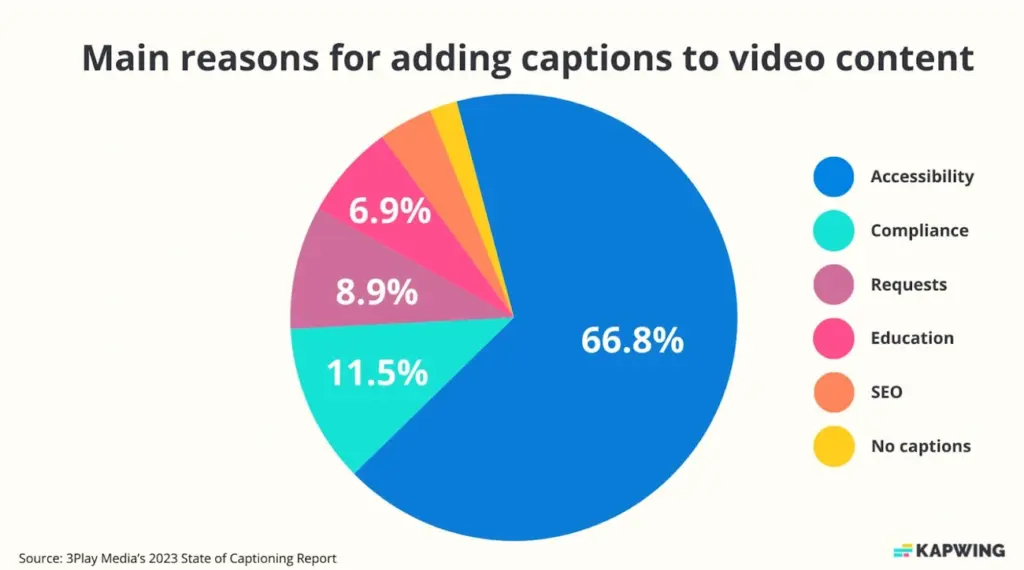
Image Source: Kapwing
What the Data Shows About Muted Viewing
Over 85% of social media videos are watched without sound. The behavior spans demographics, with 92% of mobile users and 83% of desktop users viewing video this way. Because of this move, videos that rely on audio fail to connect with the majority of viewers scrolling through feeds.
Why Captions Increase Engagement
Videos with captions receive 40% more views. 80% of viewers are more likely to watch the entire video when captions are present. Facebook’s internal study found captions boost video view time by 12% on average, with some clients like A&W Canada reporting a 25% increase. Captions improve comprehension by 56% compared to videos without them. Over half of Americans now prefer watching video content with captions, with 63% of Gen Z turning them on.
How to Create Accurate Captions
Closed captions offer the most flexibility and allow viewers to toggle them on and off. Open captions burn into the video and remain visible. Auto-generated captions provide a starting point but require editing, as YouTube’s automated system achieves only 65% accuracy. Transcription software reaches 95% accuracy.
Tools and Best Practices
Reap generates accurate captions with word-level timing and supports 98+ languages. CapCut provides professional-grade captioning tools for free. Adobe Podcast offers one-click caption generation with speaker labels. Edit auto-generated captions for accuracy and ensure they meet platform-specific requirements.
Promote Each Episode Multiple Times Over Several Weeks
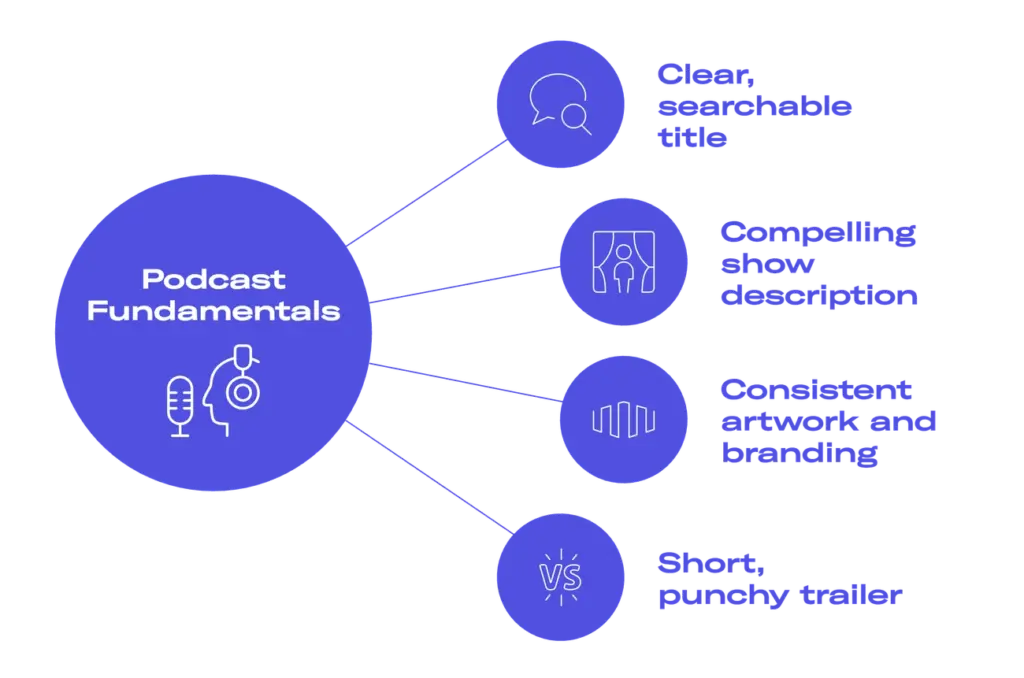
Image Source: TYX Studios
What Multi-Touch Promotion Looks Like
Multi-touch marketing presents your message to prospective listeners multiple times in formats of all types. Extract 5-10 golden clips from each episode. These clips should be 30 to 60 seconds. Turn these moments into quotable graphics and text posts highlighting your top 3-5 takeaways. This approach creates diverse touchpoints that keep your episode visible for weeks.
Why Single Posts Don’t Work
The Rule of Seven states that repeated exposure increases conversion probability. A single announcement post gets buried within hours. Social media platforms favor consistency over sporadic activity. Regular posting signals quality to algorithms. Most listeners need multiple encounters with your content before they commit to a full episode.
How to Schedule Your Promotion Calendar
Batch your content creation by dedicating one hour weekly to planning and scheduling. Tools like Hootsuite let you schedule a full week of promotional assets tied to a single episode. Buffer makes promotion-focused workflows efficient on multiple platforms. You want 2-3 posts per week rather than daily exhaustion.
Different Angles for the Same Episode
Pull from older episodes to maintain fresh content flow. Track which clips get shared or saved to refine future promotion. Vary your formats between video clips and quote graphics to reach different audience segments throughout the same episode’s lifecycle.
Build an Engaged Community Around Your Podcast
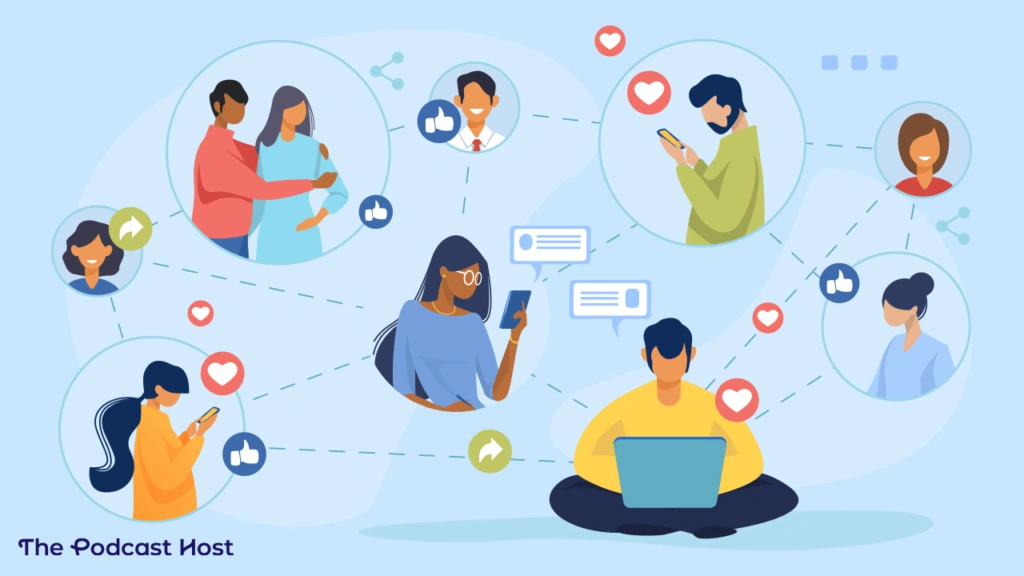
Image Source: The Podcast Host
What Community Building Actually Means
Podcasting serves as a relationship-building tool when you bring listeners together rather than simply broadcasting to them. Community creates belonging, not just connections. Focus on creating spaces where your audience interacts with each other, shares points of view, and grows together. This approach transforms passive listeners into active participants who feel invested in your podcast’s success.
Why Involvement Drives Growth
Involved listeners increase your reach through word-of-mouth recommendations. The data supports this: 80% of listeners trust podcast hosts’ recommendations, and 73% want more opportunities to interact with their favorite hosts. Therefore, promoting genuine connections builds trust and loyalty that translates into audience retention. Listeners who feel valued become supporters who promote your show within their networks naturally.
How to Promote Meaningful Interactions
Social media functions as a dialog, not a megaphone. Respond to comments and messages, ask open-ended questions, and acknowledge listener contributions by name when possible. Host live Q&A sessions where your audience can participate up-to-the-minute. Create exclusive content or early access for your most involved listeners. On top of that, encourage listeners to share their experiences related to your podcast’s topic, proving it right while generating ideas for future episodes.
Platform Options for Community Spaces
Discord remains the most popular choice for podcast communities and offers moderation tools with discussion capabilities. Reddit’s r/podcasting hosts over 200,000 members with weekly feedback threads and technical help. Facebook Groups work well for certain demographics, while platforms like Heartbeat and Fourthwall combine community with membership features. Be prepared for low conversion rates from listener to community member, since switching apps creates friction.
Tag Guests and Leverage Their Audiences
Image Source: Fame.so
What Makes Guest Episodes Valuable
Guest episodes give you access to audiences beyond your current reach. Feature someone with a sizable following and their audience becomes discoverable to you through strategic promotion. This cross-promotion amplifies your visibility substantially, especially when guests share their appearances across their channels.
Why Tagging Increases Reach
Tagging guests in your social media posts triggers algorithmic benefits. Tag relevant accounts and those posts become more likely to appear in searches. This attracts users interested in similar content. More than that, tagged individuals typically participate right away. They like, comment and share to their stories. Your content’s exposure expands as a result. Tagging serves as recognition while creating collaboration opportunities that boost engagement metrics.
How to Create Shareable Guest Content
Make sharing effortless for guests by providing ready-to-use materials. Send them graphics, pullquotes and prewritten captions with alt text for images. Share your episode transcript so they can repurpose content for blogs or newsletters. Create collaborative posts on Instagram that let guests share directly to their feed with minimal effort. Use universal links like pod.link for smooth listening across platforms of all types.
Best Practices for Guest Collaboration
Ask guests about their preferred platforms beforehand. Write a blurb they can include easily if they favor newsletters over social media. Coordinate posting schedules to maximize coverage across different days. Provide clear episode information and recording details upfront. This ensures smooth experiences that encourage enthusiastic promotion.
Use Strategic Hashtags to Expand Discoverability
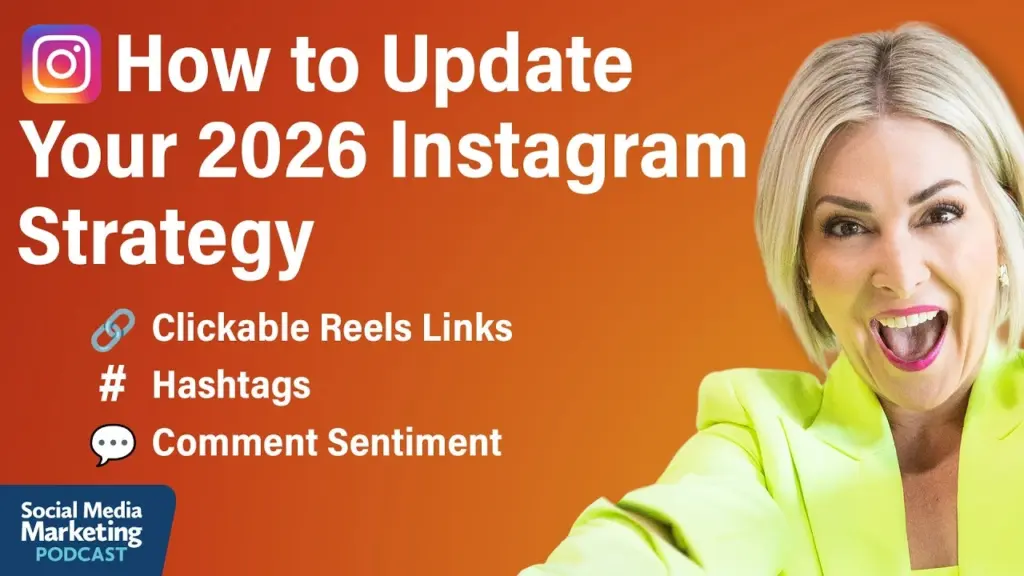
Image Source: YouTube
What Hashtag Strategy Looks Like
Hashtags have evolved from reach boosters to context signals. Platforms now scan captions and on-screen text to surface content, meaning hashtags categorize rather than magnify. Your best bet is 3 to 5 relevant hashtags that describe your topic and audience. Broad hashtags like #Podcast work well when combined with niche-specific ones like #TrueCrimePodcast and branded tags unique to your show. Rotate your hashtag sets to avoid repetitive patterns that signal spam.
Why Hashtags Still Matter in 2026
Hashtags remain valuable for search and community building when used strategically. LinkedIn still rewards hashtag usage for discoverability within industry niches. Instagram’s discovery engine gets into hashtags among captions and visual content. Hashtags help algorithms understand your content’s meaning and context, which ensures it reaches the right audience segments.
How to Research Effective Hashtags
Competitors and industry leaders in your niche will show you effective hashtags. Tools like Hashtagify and RiteTag reveal trending and relevant tags. You should search hashtags directly on platforms to verify they’re active before using them. Mid-level hashtags with 5,000 to 100,000 posts work best, as they provide visibility without overwhelming competition.
Mixing Popular and Niche Tags
The optimal performance comes from balancing 70% niche hashtags with 20% popular hashtags and 10% branded hashtags. Popular tags like #Marketing provide the initial traction you need. Specific tags like #PodcastMarketing attract engaged listeners. Niche hashtags target smaller but more relevant audiences who actually care about your content.
Maintain Consistent Posting Schedules
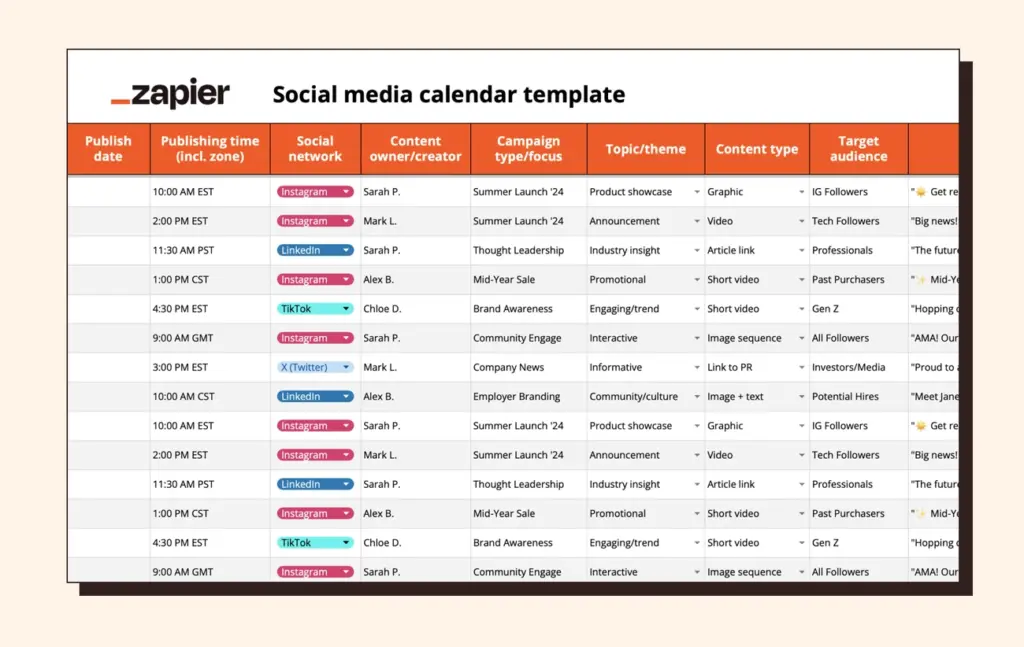
Image Source: Zapier
What Consistency Really Means
Consistency means showing up reliably, not rigidly. Podcasts with consistent publishing schedules grow their audiences up to 3x faster than those with irregular release patterns. Weekly releases on the same day work best. Shows see 10 to 25% higher first-day downloads than inconsistent ones. Therefore, your podcast social media strategy should mirror this reliability on platforms of all types.
Why Sporadic Posting Kills Growth
Sporadic posting confuses your audience and signals low commitment to algorithms. Listeners build podcasts into routines. Breaking that routine twice causes them to stop expecting new episodes. Podfade strikes between episodes 7 and 15, caused by unsustainable production workloads and slow early growth.
How to Create a Sustainable Schedule
Plan in 6-week rolling cycles. Record weeks 1-2 completely, plan weeks 3-4 with locked topics, and keep weeks 5-6 flexible to create timely content. Batch record 2+ episodes in one sitting after you complete research. Build rest periods into your calendar from the start. 40 great episodes with breaks outperform 52 mediocre ones published when you run on empty.
Automation Tools That Help
Tools like Asana and ClickUp provide task assignment and tracking for podcast teams. Notion combines wiki and calendar functionality. CoSchedule integrates content planning with social media scheduling. These expandable tools maintain your podcast promotion strategy without manual effort each day.
Show Your Personality and Behind-the-Scenes Moments

Image Source: Noble Bison Productions
What Humanizes Your Podcast Brand
Behind-the-scenes content pulls back the curtain and shows the authentic, unfiltered version of your podcast. The conversational nature of podcasting allows listeners to connect with you and humanize your brand while creating stronger emotional connections. Focusing on authenticity makes you relatable, trustworthy and human. Share personal stories about challenges you’ve overcome, lessons learned along your trip and the real moments that shaped your point of view. This bridges the gap between your podcast’s polished public image and the genuine person behind the microphone.
Why People Follow People Not Just Shows
Podcast hosts matter more to audiences than any other influencer type, with 56% of weekly listeners ranking them as most important. Podcast hosts build deeper connections than social-first influencers, and 76% of listeners have purchased after hearing a host-read advertisement. Personal and subjective narrative styles promote intimacy and emotional engagement. 70% of consumers feel a stronger connection to brands when employees share behind-the-scenes information.
How to Capture Authentic Content
Film yourself during daily tasks, from morning routines to recording sessions. Embrace imperfections and humor rather than creating curated posts. Share the messy, quirky moments that make your podcast production human and relatable. Add captions and voiceovers to provide context to your social-first approach for podcasts.
Types of Behind-the-Scenes Content That Work
Day-in-the-life videos show you tending to tasks with trending audio. Workspace or home office tours reveal your recording setup. Sneak peeks at upcoming episodes generate anticipation. Meet-the-team content introduces co-hosts or producers with interesting questions about their lives and hobbies.
Cross-Promote With Other Podcasters and Influencers
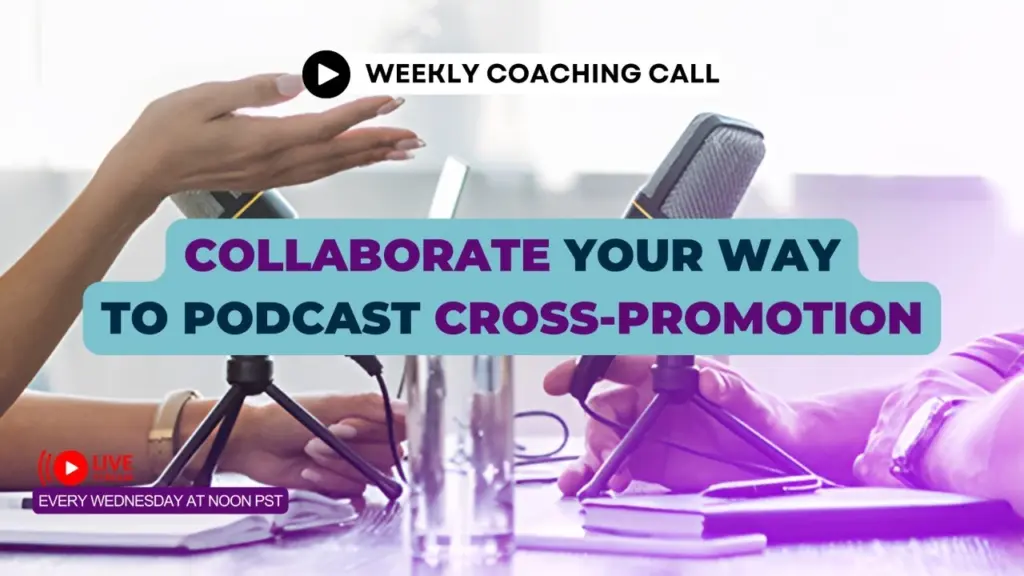
Image Source: YouTube
What Cross-Promotion Opportunities Exist
Cross-promotion is different from featuring guests. Collaboration involves two podcasters working together to create mutual value, not just boosting each other’s shows. Podcast cross-promotion ranked as the second most popular discovery method at the time listeners search for new shows. Opportunities include trailer swaps where you exchange promotional clips, interview swaps for podcasts in complementary niches, and episode swaps during seasonal breaks. Co-hosting joint episodes works especially when you split the content across both feeds and require listeners to visit both shows for the complete story.
Why Collaboration Beats Solo Promotion
Cross-promotion removes the biggest hurdle in podcast advertising: you’re reaching people already in podcast mode. The average listener follows 3 to 5 podcasts. You’re not stealing audiences but adding to their rotation. Another host’s recommendation transfers their credibility to you and creates a warmer introduction than any solo promotion achieves.
How to Find the Right Partners
Rephonic’s 3D graph tool visualizes audience overlap between shows and helps identify podcasts with similar listeners. Podchaser provides user-created lists and reviews to assess potential partners. Join communities like WOC Podcasters, ShePodcasts, or The Podcast Collaborative to network with hosts who seek collaboration.
Effective Cross-Promotion Formats
Host-read endorsements convert better than pre-produced spots, with over half of listeners making purchases after hearing host recommendations. Guest appearances let each host demonstrate their style to new audiences directly. For LinkedIn or YouTube collaborations, think about live Q&A sessions or panel discussions.
Conclusion
Now that you’ve gone through these 11 podcast social media strategy tips, it’s time to use them. You don’t need to do everything at once. Start with repurposing your best episode clips, add captions and set up a consistent posting schedule. Once you have the basics down, move to community building and cross-promotion.
Podcasting has become competitive in 2026. Millions of shows compete for attention, and these strategies give you an edge. The podcasters who build audiences through social media rather than just promote will grow the most.
Let me know which strategy worked best for you!